Covid-19 control measures alter transmission patterns of Cryptosporidium hominis in New Zealand
23 August 2025
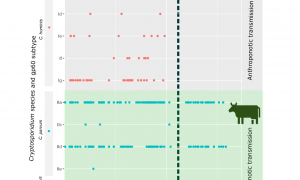
Covid-19 nonpharmaceutical interventions have been effective control measures for a range of respiratory illnesses throughout the world. These measures, which include isolation, strict border controls, social distancing and improved hygiene...Read More
Source attributed case-control study of campylobacteriosis in New Zealand
27 July 2025

Scanning electron microscope image of Campylobacter cells. Photo credit: Manawatu Microscopy and Imaging Centre The implementation of poultry food chain-focused interventions during 2006-2008 reduced human campylobacteriosis by ~50%,...Read More
Improved Methods for Purifying Giardia
21 October 2025

Giardia is a protozoan parasite that causes gastroenteritis in all classes of vertebrates and affects approximately 280 million people worldwide annually. Giardia is difficult to manipulate in in vitro environments, which hampers the...Read More
Investigating the meat pathway as a source of human Salmonella infections and diarrhea in East Africa
9 October 2025
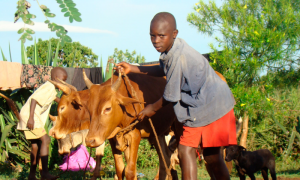
Salmonella Enteritidis and Salmonella Typhimurium are major causes of bloodstream infection and diarrheal disease in East Africa. However, the sources of human infections, including the role of the meat pathway, are poorly understood. To...Read More
Contrasting evolutionary histories of Escherichia coli serogroup O145 revealed with genomic epidemiology and carbon metabolism characteristics.
29 September 2025

Shiga toxin-producing Escherichia coli (STEC) are zoonotic pathogens residing harmlessly in the gut of bovine reservoirs, but capable of causing human disease. To manage food-related risk, seven serogroups have been declared adulterants of...Read More
Species and genotypes causing human cryptosporidiosis in New Zealand
24 September 2025

In a recent IDReC publication in Parasitology Research Juan C. Garcia-R and others present their research into the biodiversity of Cryptosporidium infections in New Zealand. The authors use Cryptosporidium DNA sequence data from over...Read More
Genotyping of Campylobacter reveals likely source of Havelock North Campylobacteriosis outbreak
15 September 2025

The 2016 outbreak of Campylobacteriosis in Havelock North made over 5000 people violently ill and has been linked to four deaths. In a recent issue of the Journal of Infection, IDReC researchers David Hayman, Nigel French, Ji Zhang, David...Read More
Predicting Ebola virus disease risk and the role of African bat birthing
4 December 2025

Ebola virus disease (EVD) presents a threat to public health throughout equatorial Africa. The maintenance reservoirs of EVD in wild animal populations and the mechanism of spillover into humans (and apes) are poorly understood. Fruit bats...Read More
Genomic analysis of an antimicrobial drug-resistant Campylobacter isolated from New Zealand poultry
28 November 2025

In 2014, antimicrobial drug-resistant Campylobacter jejuni sequence type 6964 emerged in poultry from 3 supply companies in the North Island of New Zealand and as a major cause of campylobacteriosis in humans in New Zealand. This...Read More
Why do bats tolerate the viral infections they transmit to other species?
3 September 2025

Bats are unusual among mammals in a number of ways and are notable for their tendency to host a wide range of viruses, some of which cause severe disease in humans and other mammals. By comparing the immune responses of bats with other...Read More
Epidemiological investigation of Leptospira spp. after three human leptospirosis cases
21 August 2025

IDReC researchers have published the results of a study into leptospirosis epidemiology following the diagnosis of three cases among dairy farm workers early in 2015. The lead author, Yuni Yupiana of IDReC has recently defended her PhD...Read More
Street-level diplomacy improves meat safety in Northern Tanzania
16 August 2025

IDReC researcher Jackie Benschop and co-authors have published the results of a study into relationships among authorities responsible for ensuring meat safety and the people involved in meat supply chains in Northern Tanzania. The research...Read More
Drug resistance in Staphylococcus pseudintermedius from New Zealand dogs
16 May 2025

Staphylococcus pseudintermedius is an opportunistic zoonotic pathogen that primarily colonises the skin of dogs. Drug resistance within S. pseudintermedius is increasingly reported across the globe, including methicillin resistance (MRSP) or...Read More
Exploring the Challenges of Analysing Highly Diverse Picobirnavirus Sequences
2 April 2025

The sequencing of nucleic acids directly from the environment using metagenomics has provided researchers with a snapshot of the enormous diversity of the viral world. There are an estimated 1031 viruses on Earth, but less than 1% of their...Read More
Modelling the risk of novel infectious disease emergence from biodiversity hotspots
27 March 2025

As human activities continue to expand globally, we increase the rate of habitat fragmentation and biodiversity loss and further the encroachment of human populations in previously wild areas. Since the diversity of parasitic organisms likely...Read More
IDReC researchers Publish Review of Extended-Spectrum Beta-Lactamase-Producing Enterobacteriaceae in New Zealand Dairy Farm Environments
18 December 2025

Rose Collis and co-authors present a review of extended-spectrum beta-lactamase-producing Enterobacteriaceae in dairy farm environments with a New Zealand perspective. This review is published in a special edition of the journal Foodborne...Read More
Prevalence of Toxic Escherichia coli on New Zealand Dairy Farms
26 July 2025

Shiga toxin-producing Escherichia coli (STEC) is a type of E. coli baceteria that produces a potent toxin which can cause bloody diarrhoea and kidney failure in people, particularly young children. Cattle are natural (asymptomatic) carriers...Read More
New approaches for assessing genealogical relationships between bacteria
31 May 2025

IDReC researchers led by Ji Zhang have recently published a paper entitled “Genome-by-genome approach for fast bacterial genealogical relationship evaluation” in the journal Bioinformatics. Recent advances in DNA sequencing...Read More
Toxoplasma gondii and Giardia duodenalis detected in commercial green-lipped mussels
24 April 2025

A recently published study undertaken by Alicia Coupe, in collaboration with IDReC, has detected the protozoan parasites Toxoplasma gondii and Giardia duodenalis in green-lipped mussels. Molecular prevalence of T. gondii was estimated...Read More
Updating the genomic taxonomy and epidemiology of Campylobacter hyointestinalis
15 February 2026

In their recent paper published in Scientific Reports, David Wilkinson and colleagues demonstrated the presence of the enteric bacterium Campylobacter hyointestinalis in sheep, cattle and deer from the Manawatu region. Campylobacter spp. are...Read More
Genomic Analysis of long-term Campylobacter colonisation
30 January 2026
Campylobacteriosis is inflammation of the gastrointestinal tract as a result of Campylobacter infection. Most campylobacteriosis cases are acute and self-limiting, with Campylobacter excretion ceasing a few weeks after symptoms cease. Longer...Read More
Genomic Analysis of a Salmonella enterica outbreak
11 October 2025

Salmonellosis, caused by nontyphoidal serovars of Salmonella enterica subsp. enterica is the second largest cause of bacterial enteritis in New Zealand and a significant burden on public health. For example, during 1998-2012, an extended...Read More
PhD student Samuel Bloomfield presents genomic analysis of Salmonella outbreak at ASM Microbe conference
22 August 2025

From the 1st to the 5th of June, 2017 IDRECs Samuel Bloomfield attended the ASM Microbe conference in New Orleans, Louisiana, USA. During the conference Samuel attended a workshop on new bacterial genomics software (PATRIC), networked with a...Read More
Soil bacteria and their invertebrate consumer respond differently to warming and freeze-thaw cycles, in the Antarctic Dry Valleys
22 August 2025

Recently published research by IDREC researcher Matt Knox and co-authors show decoupled responses of soil bacteria and their invertebrate consumer to warming, but not freeze-thaw cycles (FTCs), in the Antarctic Dry Valleys. Using a laboratory...Read More
Population risk factors for measles in New Zealand
8 June 2025

Despite eliminating endemic measles in New Zealand, small outbreaks continue to occur, with recorded cases in Auckland , Palmerston North and Waikato within the last 12 months alone. Since measles outbreaks over the last decade in...Read More
Bat and Virus Ecology in a Dynamic World
5 May 2025

The March 2017 issue of Microbiology Australia features an "Under the Microscope" article by IDReC researchers David Wilkinson and David Hayman. Understanding of ecological relationships leading up to viral spillover can potentially help...Read More
Antimicrobial Resistance Challenges in New Zealand
23 February 2026

The March 2017 issue of the New Zealand Veterinary Journal focuses on antimicrobial resistance (AMR) and features papers authored by several researchers in IDReC. Leah Toombs-Ruane and co-authors present a review of multidrug resistant...Read More
Molecular epidemiology of New Zealand Campylobacter coli strains
20 January 2026

Campylobacteriosis is one of the most common foodborne diseases worldwide and a significant health burden in New Zealand. Campylobacter jejuni is the predominant Campylobacter species worldwide, accounting for approximately 90% of human...Read More
The origin of Cryptosporidium - a major infectious disease in vertebrates.
8 November 2025

Cryptosporidium species are parasites that have been found in all vertebrate groups although most of their diversity is associated with mammal and bird species. They are increasingly known as major contributors to diarrhoea morbidity and...Read More
David Hayman and Reed Hranac present at the International Bat Research Conference
7 September 2025

Dr David Hayman and PhD student Reed Hranac recently presented at the International Bat Research Conference in Umhlanga, Durban. With warm weather and beautiful scenery (as depicted in some of the photos) it was clearly an ideal location for a...Read More
IDReC and University of Glasgow researchers establish an African Leptospirosis Network
1 August 2025

There is growing evidence of a substantial burden of human leptospirosis in Africa but it is rarely considered as a differential diagnosis for acute febrile illness, and there is little access to diagnostic services for leptospirosis on the...Read More
IDReC Sam Bloomfield , Research into cause of human salmonellosis cases in New Zealand.
20 May 2025
In New Zealand, most salmonellosis cases are caused by Salmonella enterica serovar Typhimurium. In 1998, Salmonella Typhimurium DT160 was isolated from a human salmonellosis patient in New Zealand. S. Typhimurium DT160 then became the...Read More
IDReC Dr David A Wilkinson, has made the front cover of the latest issue of Environmental Microbiology.
9 December 2025

Research by one of IDReC's new postdoctoral researchers, Dr David A Wilkinson, has made the front cover of the latest issue of Environmental Microbiology. Together with other researchers from Reunion Island, in the Indian Ocean, he was...Read More
Biannual birth pulses allow filoviruses to persist in bat populations
25 February 2026

Pioneers of the application of mathematics to infectious disease biology posed three interrelated questions about infectious disease dynamics: can we predict and explain the size and periodicity of epidemics, how does the flow of susceptible...Read More
Shedding and Seroprevalence of Pathogenic Leptospira spp. in Sheep and Cattle at a New Zealand Abattoir
31 October 2025

Fang Fang PhD Candidate, mEpiLab /IVABS / EpiCentre Leptospirosis is a zoonotic disease of worldwide importance caused by pathogenic spirochaetes belonging to the genus Leptospira. Feral and domestic mammals can be maintenance hosts to...Read More
The transmission of Mycobacterium avium subsp. paratuberculosis between farms via livestock movements
22 August 2025

Nelly Marquetoux PhD candidate, EpiCentre / IVABS Mycobacterium avium subsp. paratuberculosis (MAP) is the causal agent for paratuberculosis (PTB) or Johne’s disease in livestock. The purchase of infected stock is thought to be...Read More
Identification of populations for disease surveillance in a translocated network of endangered Takahe
21 March 2025

Zoë Grange PhD Candidate, Allan Wilson Centre, mEpilab, Wildbase and Victoria University of Wellington Social network analysis is being increasingly used in epidemiology and disease modelling in humans, domestic animals, and...Read More
Risk factors for Shiga toxin-producing Escherichia coli infections in humans in New Zealand
1 November 2025

Patricia Jaros PhD Candidate, mEpiLab Shiga toxin-producing Escherichia coli (STEC) such as E. coli O157:H7 and related non-O157 STEC strains are pathogens of public health concern worldwide. They can cause...Read More
Genomic Analysis of the Kiwifruit Pathogen Pseudomonas syringae pv. Actinidiae
4 October 2025

Photo credit: Rami El-Shareif HONOUR McCANN Postdoctoral Researcher, Rainey Lab / IDReC / NZIAS, Massey University I work on the plant pathogen Pseudomonas syringae, which numbers among the most destructive bacterial...Read More